Mediterranean Toile Floral Pattern Peony Guide
The allure of the Mediterranean coast often lies in its ability to blend rugged natural beauty with refined human history. A Mediterranean toile floral pattern peony design captures this specific atmosphere by merging the structural elegance of coastal architecture with the soft, organic forms of blooming gardens. This is not merely a decorative image; it is a storytelling device that transports the viewer to a sun-drenched village where whitewashed walls meet sky-blue domes and lush greenery spills over ancient stone. For anyone working in visual media, understanding the nuances of such a pattern is essential for selecting the right asset for a project.
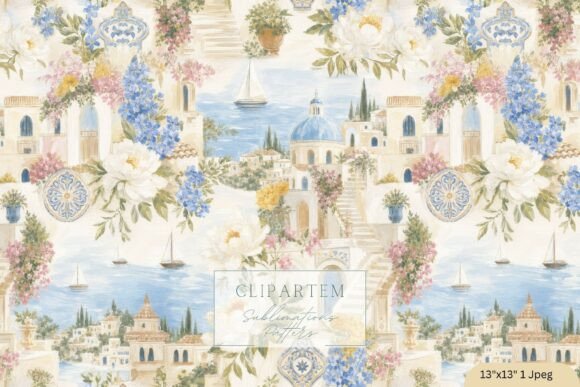
At its core, this design style relies on the traditional toile technique, which typically features intricate, monochromatic scenes printed on fabric. However, this modern interpretation introduces a painterly palette of cream, sky blue, blush pink, dusty rose, and antique gold. The inclusion of peonies, hydrangeas, wisteria, and cypress trees alongside sailboats and ceramic tilework creates a seamless narrative loop. The result is a texture that feels both timeless and contemporary, suitable for a wide array of applications ranging from high-fashion apparel to cozy home décor.
Why This Aesthetic Resonates Across Different Fields
The value of a Mediterranean toile floral pattern peony motif shifts depending on who is holding the brush or managing the project. For a hobbyist quilter, the priority might be the emotional connection to the imagery and the ease of cutting the fabric. For a professional interior designer, the focus shifts to scale, repeat quality, and how the colors interact with natural light in a room. Meanwhile, a small business owner launching a print-on-demand store will evaluate the file based on its commercial versatility and resolution.
This diversity in application highlights why high-quality digital assets are so critical. A single pattern file, such as one offering 4000x4000 pixels at 300 DPI, serves as a foundational building block. It allows a beginner to create a simple tote bag without worrying about pixelation, while simultaneously providing a professional marketer with enough detail to create a large-scale wallpaper mural that retains clarity upon close inspection. The "heirloom quality" mentioned in the design description is not just marketing fluff; it refers to the classic composition that avoids trendy elements which might date quickly, ensuring long-term usefulness.
Perspectives for Creators and Entrepreneurs
For entrepreneurs utilizing platforms like Spoonflower, Printful, or Printify, the technical specifications of the file are paramount. When evaluating a Mediterranean toile floral pattern peony design for commercial use, the primary concerns are resolution and color fidelity. A 300 DPI RGB file ensures that the delicate lines of the sailboats and the subtle gradients in the peony petals do not become blurry when printed on physical goods.
- Apparel Designers: Look for seamless repeats that align perfectly at the seams of a garment, ensuring the architectural elements do not look cut off awkwardly.
- Home Décor Brands: Prioritize the color palette's ability to match existing furniture trends, noting how the antique gold and dusty rose offer a sophisticated alternative to bright primary colors.
- Stationery Makers: Focus on the intricacy of the line work, which translates well to smaller formats like gift wrap and greeting cards where fine details add perceived value.
The flexibility of this specific pattern allows it to bridge the gap between the "cottagecore" aesthetic, which emphasizes rural simplicity, and a more refined "grandmacore" look that celebrates vintage elegance. A freelancer creating a brand identity for a travel agency might use this pattern to evoke a sense of romantic escape, whereas a blogger focusing on lifestyle content could use it to frame photography, adding a layer of thematic consistency to their posts.
Educational and Hobbyist Applications
In educational settings or community workshops, this type of pattern serves as an excellent case study for discussing cultural motifs and design history. Educators can use the Mediterranean toile floral pattern peony to teach students about how traditional French toile de Jouy has evolved to include global influences. Students learn to identify the distinct elements: the cypress trees representing the landscape, the hydrangeas adding volume, and the domed churches grounding the scene in a specific geographic reality.
For hobbyists, particularly those involved in quilting or scrapbooking, the narrative aspect of the pattern is a major draw. Unlike abstract geometric prints, a scenic toile invites the viewer to explore the image. A quilter might choose this fabric for a heritage quilt, appreciating how the storybook quality of the illustration complements hand-stitching techniques. The soft, painterly style means that minor imperfections in cutting or sewing are less noticeable than they would be with a rigid, high-contrast geometric print, making it forgiving for beginners.
Evaluating Quality and Usability
When deciding whether this pattern fits a specific project, one must consider the end goal. Is the objective to create something fast and trendy, or to produce a lasting piece with emotional resonance? The Mediterranean toile floral pattern peony leans heavily toward the latter. Its strength lies in its ability to remain relevant across seasons because it draws on classical artistic traditions rather than fleeting internet trends.
Professionals should also consider the color profile. The use of cream and sky blue provides a neutral base that is easy to pair with other materials, while the pops of blush pink and dusty rose add warmth without overwhelming the senses. This balance makes the pattern highly adaptable for sublimation projects, where color accuracy is crucial. Whether printing on a polyester tote bag or a ceramic mug, the antique gold accents can provide a luxurious finish that elevates the perceived quality of the product.
Ultimately, the decision to use this design comes down to the story you wish to tell. If the goal is to evoke the romance of an Italian or Greek coastal escape, few patterns achieve this as effectively as a well-executed toile featuring peonies and coastal architecture. It offers a visual shorthand for relaxation, history, and natural beauty. By understanding the different ways various audiences interact with such a design—from the technical needs of a printer to the emotional desires of a consumer—creators can make more informed decisions that lead to successful, satisfying outcomes.
Whether you are a marketer looking for a background image that conveys trust and elegance, or a DIY enthusiast planning a weekend sewing project, the versatility of this pattern ensures it can meet diverse needs. The key is to recognize that the value of the Mediterranean toile floral pattern peony is not just in the image itself, but in how it is applied to solve a specific creative problem or fulfill a particular aesthetic vision.