Integrating USA 250th Anniversary Digital Paper into Professional Creative Workflows
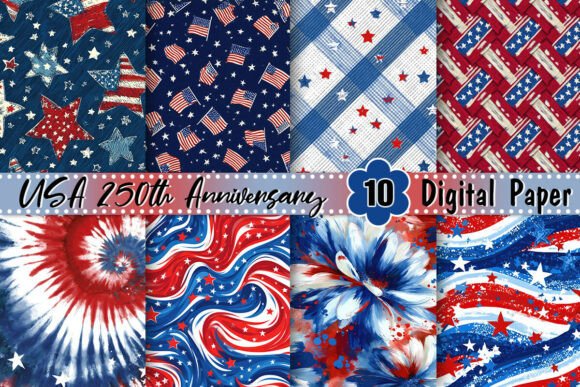
The approach to a major historical milestone like the United States' 250th Anniversary requires more than just good intentions; it demands high-quality assets that can withstand professional scrutiny. For creators, marketers, and small business owners, the USA 250th Anniversary Digital Paper serves as a foundational element in a broader design strategy. This collection, typically comprising 10 JPG digital images with a resolution of 300 DPI, is not merely a decorative add-on but a functional resource designed to integrate seamlessly into existing production pipelines. Understanding how to deploy these non-seamless textures effectively can significantly elevate the quality of commemorative projects, ensuring that the final output honors the gravity of the occasion while meeting modern commercial standards.
Defining the Asset and Its Role in Production
At its core, this digital paper pack provides high-resolution backgrounds that evoke the spirit of the Semiquincentennial. The specification of 300 DPI is critical here. In the world of print and professional publishing, this resolution is the baseline for sharp, crisp output. Whether you are designing a limited-edition brochure, a commemorative poster, or packaging for a special product run, low-resolution images result in pixelation and a lack of professionalism. These 10 JPG files offer the density required for offset printing, large-format signage, and high-end home printing without degradation.
The "non-seamless" nature of these images is a specific characteristic that influences how they are used. Unlike seamless patterns that tile infinitely for web backgrounds, non-seamless papers are intended as distinct sheets or focal backgrounds. This means each image likely contains unique distressing, watermarks, or compositional elements that tell a specific visual story. For a project manager or lead designer, this implies that these assets are best utilized as full-page backgrounds, card stock designs, or layered elements where the edges and specific composition of the sheet matter. Recognizing this distinction early in the planning phase prevents workflow bottlenecks later when trying to force a texture to tile incorrectly.
Strategic Implementation Across Project Phases
Incorporating the USA 250th Anniversary Digital Paper into a workflow begins long before the actual design software is opened. It starts during the conceptualization and procurement phase. For educators planning curriculum materials or entrepreneurs launching a patriotic product line, selecting the right aesthetic tone is vital. These digital papers often feature motifs ranging from colonial typography to modern minimalist interpretations of the flag. Reviewing the 10 included images allows teams to align the visual language with their brand voice or educational goals before committing to a layout.
During the execution phase, these assets interact heavily with other tools in the creative stack. In applications like Adobe Photoshop, Illustrator, or even user-friendly platforms like Canva, these JPGs serve as the base layer. Because they are high-resolution, they can be manipulated with blending modes, opacity adjustments, and masking without losing detail. A common workflow involves placing text or vector graphics over these papers. The texture of the digital paper adds depth to flat vector designs, creating a tactile feel even in a digital format. For example, a freelancer creating an invitation suite might use one of the heavier textured papers as the background, overlaying elegant serif fonts to create a sense of history and permanence.
Post-production is another area where the quality of the source file dictates the ease of the process. When preparing files for a commercial printer, the 300 DPI resolution ensures that color separation and halftoning occur correctly. If a marketer decides to pivot from a digital campaign to physical merchandise—such as tote bags or journals—having these high-fidelity assets ready means the transition is smooth. There is no need to source new images or upscale low-quality files, which often introduces artifacts. The readiness of these assets supports agility in business workflows, allowing teams to capitalize on trending topics surrounding the anniversary without technical delays.
Compatibility and Technical Integration
One of the practical advantages of using standard JPG formats for the USA 250th Anniversary Digital Paper is universal compatibility. Regardless of whether a team uses industry-standard software or free, open-source alternatives like GIMP or Inkscape, JPG is a universally recognized format. This reduces friction in collaborative environments where different stakeholders may be using different tools. A blogger might need to resize an image for a web header, while a publisher needs the full resolution for a book cover; the same source file serves both needs effectively, provided the workflow respects the original resolution.
However, effective integration also requires attention to color management. Digital screens display color in RGB, while print operates in CMYK. High-quality digital papers are usually created with print in mind, but it is essential to preview how the colors shift when converted. Professionals should incorporate a soft-proofing step in their workflow to ensure the reds, whites, and blues of the anniversary theme remain vibrant and accurate across different mediums. This step is crucial for maintaining brand consistency, especially for businesses that have strict guidelines on how their logo interacts with patriotic imagery.
Optimizing Organization and Efficiency
To maximize the utility of these 10 digital images, organization is key. In a fast-paced environment, assets can easily get lost or misused. A best practice is to create a dedicated asset library folder specifically for the 250th Anniversary projects. Within this folder, categorize the papers by mood or intensity—for instance, separating bold, graphic-heavy sheets from subtle, textured backgrounds. Tagging these files with metadata such as "300 DPI," "Non-seamless," and "Commercial Use" (if applicable) streamlines the search process for future projects. This level of organization pays dividends when deadlines tighten, allowing creators to locate the perfect background instantly rather than sifting through unrelated files.
Efficiency also comes from understanding the limitations and strengths of the non-seamless format. Since these images do not tile, designers should plan their canvas sizes to match the aspect ratio of the digital paper or be prepared to crop strategically. Trying to stretch a non-seamless image to fit a wide banner can distort the texture and ruin the aesthetic. Instead, use the image as a centered focal point or combine multiple sheets in a collage style. This approach not only preserves the integrity of the artwork but also creates a dynamic, layered look that feels intentional and curated.
Long-Term Value and Versatility
While the immediate application of the USA 250th Anniversary Digital Paper is tied to the specific timeframe of the celebration, the utility of high-quality textured backgrounds extends beyond a single event. Once the peak of the anniversary passes, these assets can be repurposed for general Americana-themed content, history education materials, or any project requiring a classic, authoritative aesthetic. The investment in 300 DPI files ensures that they remain viable for years, unlike lower-resolution trends that quickly become obsolete.
For hobbyists and scrapbookers, these digital papers offer a bridge between traditional crafting and digital innovation. They can be printed at home on various types of cardstock to create physical embellishments, or used digitally in e-cards and social media graphics. The versatility lies in the balance between the specific thematic elements of the 250th anniversary and the timeless quality of the textures themselves. By treating these digital papers as core components of a flexible design system rather than one-off decorations, users can extract maximum value from the purchase.
Ultimately, the successful deployment of the USA 250th Anniversary Digital Paper relies on a clear understanding of its technical specifications and a strategic approach to its placement within the creative process. By respecting the 300 DPI resolution, acknowledging the non-seamless nature of the files, and integrating them thoughtfully with other design elements, professionals and enthusiasts alike can produce work that is both visually striking and technically sound. Whether the goal is to educate, celebrate, or sell, these digital assets provide a robust foundation for honoring a significant chapter in history with the dignity and quality it deserves.