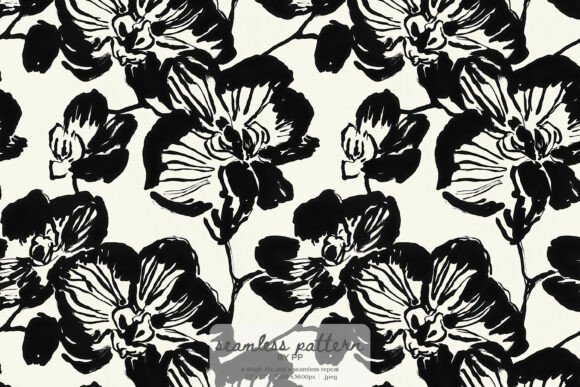
Elevate Your Designs with a Hand Drawn Monochrome Orchid Pattern
Finding the right visual element can make or break a creative project. You might have the perfect layout for a wedding invitation or a solid concept for a new brand identity, but without the right texture, it often feels flat. This is where a hand drawn monochrome orchid pattern steps in to bridge the gap between standard digital graphics and authentic artistry. Unlike the sterile, repetitive vectors that flood stock libraries, this type of design offers the organic imperfection of ink on paper. It brings a sense of history and craftsmanship to modern projects, appealing to audiences who crave sophistication and depth.
The appeal of this specific floral motif lies in its versatility. The bold, expressive ink-style blooms are not just decorative; they communicate a mood. When you integrate a seamless pattern featuring these abstract botanical details, you aren't just filling space; you are setting a tone of luxury and intentionality. Whether you are a small business owner packaging handmade soaps or a blogger designing a media kit, the choice of a high-resolution, non-AI generated asset signals quality to your audience.
Why Authentic Ink Styles Matter in Modern Branding
In an era where artificial intelligence can generate images in seconds, there is a growing premium on work that is undeniably human. A bold and sophisticated hand drawn monochrome orchid seamless pattern crafted by an artist carries a weight that algorithmic outputs often lack. The strokes vary in thickness, the ink bleeds slightly, and the composition feels alive. For entrepreneurs and marketers, leveraging this "no AI" quality is a strategic move. It tells your customers that you value authenticity and have invested in unique assets rather than generic templates.
Consider the impact on elevated branding projects. If you are launching a boutique skincare line or a high-end stationery shop, your packaging needs to whisper luxury before the customer even touches the product. Using a striking black floral digital paper as a background for your labels or boxes instantly elevates the perceived value. The monochrome palette ensures that the design remains timeless and doesn't clash with other brand colors, while the orchid motif adds a touch of natural elegance that resonates with wellness and beauty sectors.
Practical Applications for Creators and Hobbyists
The utility of a high-resolution jpeg seamless repeat extends far beyond simple backgrounds. Because the file provided is typically large—such as 12" x 12" at 300 dpi—it is ready for professional print production immediately. Here is how different users can apply this resource in real-world scenarios:
- Wedding and Event Stationery: Wedding planners and couples often struggle to find invitations that feel bespoke without the bespoke price tag. Using this pattern for invitation suites, menu cards, or place settings creates a cohesive, high-end look. The seamless nature means you can tile it across large formats like table runners or backdrop walls without visible breaks.
- Fabric and Surface Design: For those in the textile industry or hobbyists using print-on-demand services, this pattern is ideal for creating custom fabrics. Imagine a monochrome orchid print on silk scarves, cotton tote bags, or upholstery. The abstract botanical detail works particularly well in fashion, offering a modern twist on traditional floral prints.
- Scrapbooking and Journaling: Digital scrapbookers and journal enthusiasts need elements that layer well. Since the pattern comes in a version with a solid background (no transparency), it serves as a perfect base page for digital layouts or a printed paper for physical albums. It provides a dramatic contrast for photos and handwritten notes.
- Web and Social Media Assets: Bloggers and content creators can use the single tile version to create textured overlays for Instagram stories or website headers. The black and white scheme ensures that text placed over the image remains readable, solving a common design headache.
Navigating File Formats and Technical Specifications
When downloading and preparing to use a luxury ink blossom repeat, understanding the technical deliverables is crucial for a smooth workflow. Typically, you will receive two versions: a single tile and a seamlessly repeated version combining four tiles. Both are usually sized at 12" x 12" with a resolution of 3600x3600 pixels at 300 dpi. This specification is vital because 300 dpi is the industry standard for crisp, professional printing. Anything lower might result in pixelation when scaled up for large format prints like wallpaper or fabric.
It is important to note that these patterns often do not have a transparent background. They are designed as digital papers with a solid fill, usually white or off-white, behind the black ink strokes. This is actually a benefit for many applications. If you are printing on colored or textured paper, having a solid white background in the digital file ensures the design looks exactly as intended, covering whatever lies beneath. However, if your goal is to overlay the flowers onto a photograph or a colored graphic, you will need to use software like Photoshop to remove the background using blending modes (such as "Multiply") or selection tools. Knowing this beforehand saves time during the design phase.
Strategic Considerations Before You Buy
Before integrating this pattern into your commercial creations, consider the context of your end product. While the monochrome scheme is versatile, it relies heavily on contrast. If you plan to print this on dark paper, the black ink will disappear unless you invert the colors or use a foil stamping technique. For most standard home or office printers, white or cream cardstock yields the best results, allowing the expressive ink-style blooms to stand out sharply.
Furthermore, think about the scale of your project. The seamless repeat allows for infinite tiling, but the visual impact changes depending on how much you scale the image. For a subtle texture on a business card, the pattern might need to be scaled down significantly. Conversely, for a feature wall or a full-sheet fabric print, the original 12x12 dimensions provide excellent clarity. Always test print a small section first to ensure the fine lines of the hand-drawn orchids render correctly on your specific printer or with your chosen print vendor.
Ultimately, choosing a hand drawn monochrome orchid pattern is about more than just aesthetics; it is about selecting a tool that enhances your storytelling. Whether you are an educator creating engaging classroom materials, a publisher designing book covers, or a freelancer building a portfolio, this asset offers a blend of classic beauty and modern utility. By understanding its features and limitations, you can deploy it effectively to create work that feels both personal and professionally polished.