Beachy Seamless Digital Paper for Every Creator
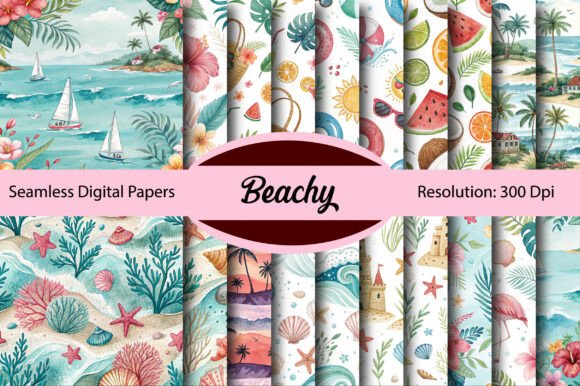
Imagine opening your design software and instantly finding a texture that captures the warmth of sun-bleached driftwood, the soft ripple of tidal sand, or the crisp clarity of ocean foam. This is the essence of Beachy Seamless Digital Paper. Unlike standard stock images that often come with hard edges or limited resolution, these assets are engineered specifically for repetition without visible breaks. They offer a 300 dpi resolution in JPEG format, ensuring that whether you are printing a wedding invitation or designing a website header, the quality remains sharp and professional. The "seamless" nature means the pattern tiles perfectly, allowing you to cover any surface area, from a small business card to a large format wallpaper, without awkward cuts or mismatched lines.
The value of these digital backgrounds shifts significantly depending on who is holding the mouse. For a professional graphic designer, the priority might be technical precision and commercial reliability. For a hobbyist scrapbooking a family vacation, the emotional resonance and ease of use take center stage. Understanding how different creators interact with these tools helps clarify why high-quality seamless patterns are such a versatile asset in the modern digital toolkit.
Why Resolution and Format Matter Across Industries
Before diving into specific use cases, it is crucial to understand the technical foundation. These files are provided at 300 dpi, which is the industry standard for high-quality printing. If you are a small business owner creating packaging for a new line of organic soaps, printing at a lower resolution like 72 dpi (common for web only) would result in pixelated, blurry images that undermine brand credibility. The JPEG format ensures broad compatibility; you do not need expensive or niche software to open, edit, or manipulate these files. They work in Photoshop, Illustrator, Canva, Microsoft Word, and even basic photo viewers.
The transparency aspect mentioned in some pattern collections adds another layer of utility. While standard JPEGs have a solid background, seamless patterns designed with transparency in mind (often saved as PNGs, though high-quality JPEGs can be masked easily) allow for layering. You can place a beachy texture over a solid color or another image to create depth. This flexibility is what separates amateur designs from polished, professional work.
The Professional and Entrepreneurial Perspective
For marketers, publishers, and small business owners, time is money. The primary evaluation criterion for Beachy Seamless Digital Paper in this group is efficiency and brand consistency. Consider a boutique hotel chain launching a summer campaign. They need visuals that evoke relaxation and coastal luxury across multiple touchpoints: email newsletters, social media ads, physical brochures, and lobby displays.
- Packaging Design: A soap maker can wrap a digital label around a 3D mockup using a seamless sand texture, giving customers a tactile sense of the product before they buy.
- Web Development: Developers can use these patterns as lightweight background elements for landing pages. Because the file tiles seamlessly, they can load a small file size that repeats infinitely, improving site speed compared to loading one massive background image.
- Brand Identity: Consistency is key. Using the same subtle wave pattern across business cards, letterheads, and invoice templates creates a cohesive brand identity that feels intentional and high-end.
Professionals also care about licensing and commercial value. Knowing that these assets are cleared for commercial use allows entrepreneurs to build products—like party packs or printable planners—that they can sell without legal worry. The ability to scale a pattern from a tiny icon background to a large trade show banner without losing quality is a significant return on investment.
Creativity for Hobbyists and Crafters
On the other end of the spectrum, the hobbyist approaches these files with a focus on creativity and personal expression. For the scrapbooker or the papercraft enthusiast, the emotional connection to the imagery is paramount. A "beachy" theme isn't just a color palette; it is a memory of a summer trip, a wedding on the shore, or a love for the ocean.
Digital scrapbooking has revolutionized how people preserve memories. Instead of buying physical paper packs that take up storage space and can only be used once, digital papers allow for infinite experimentation. A user can try a shell pattern behind a photo, decide it is too busy, swap it for a subtle water ripple, and save both versions instantly. The 300 dpi resolution ensures that when they do decide to print their layout at a local print shop, the colors remain vibrant and the details crisp.
Furthermore, crafters often use these patterns for physical projects beyond paper. With the rise of home cutting machines, users can print these seamless designs onto cardstock to create custom gift tags, party favors, or greeting cards. The seamless nature is particularly useful here; if a project requires a piece of paper larger than the printer's capacity, the user can tile the pattern across multiple sheets and assemble them with near-invisible seams.
Educators and Content Creators
Teachers, bloggers, and online educators face a unique challenge: keeping visual materials engaging without distracting from the core message. A blog post about marine biology or a lesson plan on coastal erosion benefits greatly from thematic backgrounds. However, a busy photograph can make text unreadable.
This is where the utility of seamless patterns shines. By using a low-opacity beachy pattern as a blog background or a slide deck backdrop, educators add thematic context without sacrificing legibility. It creates a professional aesthetic that signals to the audience that care was put into the presentation. For freelancers creating content for clients in the travel or lifestyle sectors, having a library of high-quality, neutral yet thematic backgrounds speeds up the workflow immensely. They can drag, drop, and adjust, focusing more on the copy and strategy rather than hunting for the perfect image.
Evaluating Fit for Your Projects
How do you know if this specific type of digital paper matches your current needs? It comes down to three questions regarding your project goals:
- What is the final output? If you are designing strictly for mobile screens, 72 dpi might suffice, but if there is any chance of print (even a small flyer), 300 dpi is non-negotiable. Beachy Seamless Digital Paper covers both bases effectively.
- Do you need scalability? If your design needs to cover a variable area, such as a website footer that stretches across different monitor sizes or a wrapping paper roll, a seamless pattern is the only logical choice. Standard images will distort or cut off.
- Is the mood right? Coastal themes evoke calmness, openness, and freshness. If your brand or project aims for high-energy neon vibes or dark, moody aesthetics, a beach theme might clash. However, for wellness brands, travel agencies, and lifestyle blogs, it is often the perfect tonal match.
The beauty of these digital assets lies in their adaptability. A fashion designer might use the texture to simulate fabric for a digital sketch. A party planner might use it to design custom napkins for a seaside-themed event. A real estate agent might use it to frame listings for beachfront properties. The tool remains the same, but the application transforms based on the user's intent.
Ultimately, integrating high-resolution, seamless textures into your workflow bridges the gap between a good idea and a great execution. Whether you are a beginner looking to make your first greeting card or a seasoned pro refining a global ad campaign, the quality and flexibility of these patterns provide a solid foundation for visual storytelling. They remove technical barriers, allowing you to focus on what truly matters: the story you are telling and the audience you are reaching.